
The crime scene by day two.
One tab per room. One tab per rep. One tab for VIP customers. By day two of any show the Sheet has fifteen versions and nobody knows which is current. Half the team is reading yesterday's plan.
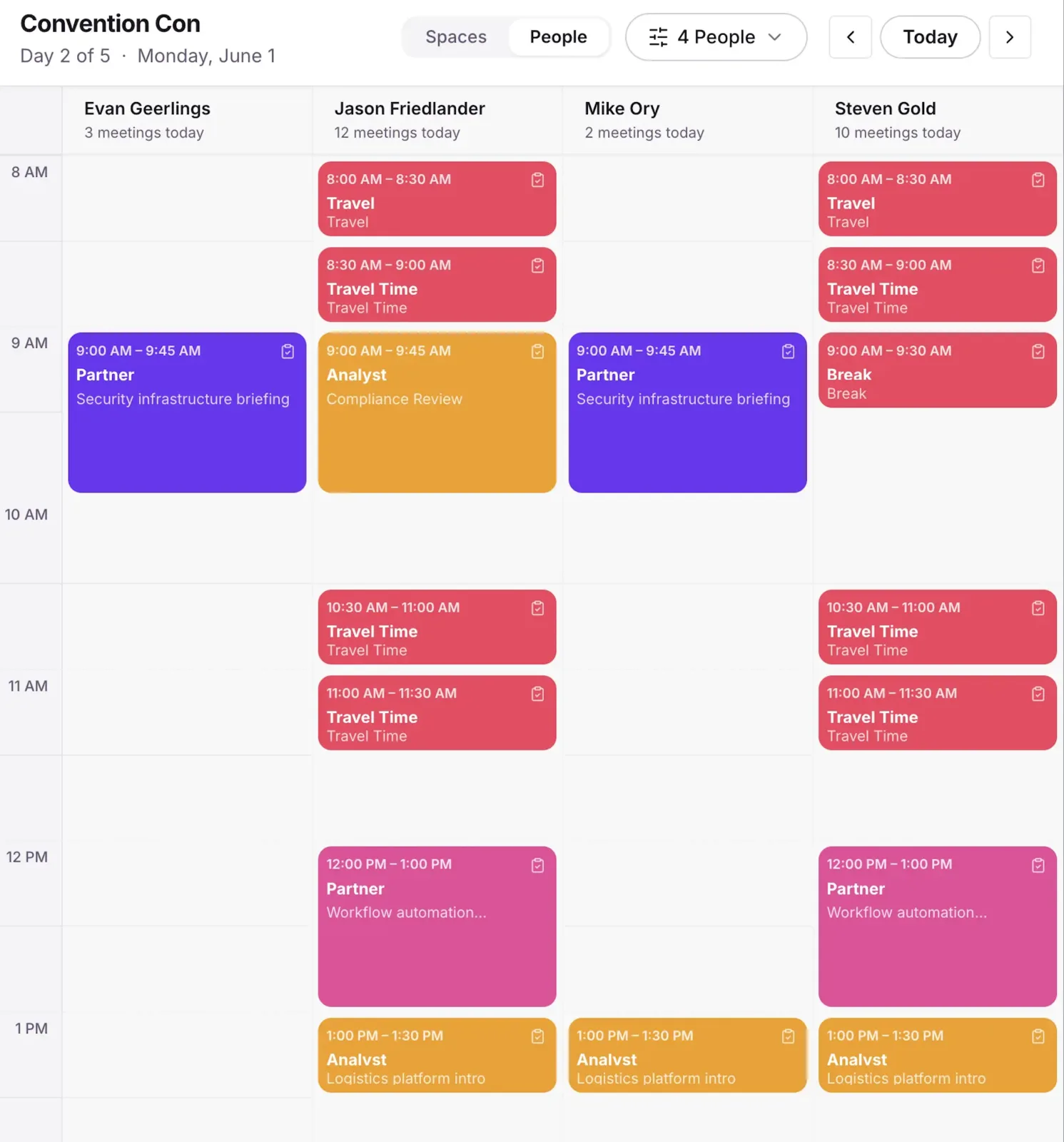
Trade show meeting management is how a vendor team coordinates everything that happens at a booth. The customer meetings, the demo stations, the rooms, and the people running them. It is the work of keeping one schedule true while a hundred things move at once. Calendar tools manage time. Spreadsheets manage data. Neither manages the intersection of rooms, people, demo stations, and customer meetings in one place.
It is vendor side work. It belongs to the company exhibiting at the show, not the company running it. That distinction is the whole thing.
Event organizer software like Cvent, Bizzabo, and Swapcard runs the conference itself. Registration, the agenda, the mobile app for attendees. That is a different job, and a different buyer.
Trade show meeting management is what the exhibitor does inside its own booth footprint. It covers four things at once. The rooms and suites you booked. The demo stations across the floor. The people on your team working in shifts. And the customer meetings that fill all of it.
Manage any one of those alone and it looks simple. Manage the intersection of all four, live, while the schedule changes hour by hour, and you have the real job.
Most teams reach for a tool they already have. Each one works right up until the show actually starts.
Each tab was one room.
One tab per room. One tab per rep. One tab for VIP customers. By day two of any show the Sheet has fifteen versions and nobody knows which is current. Half the team is reading yesterday's plan.
Clean for setup. It falls apart the moment anything changes. Reps stop updating it after day one. Once two people stop logging meetings, the data is stale and the tool is dead weight.
A scheduler like Calendly, or a point tool like Jifflenow, books a slot. It does not coordinate a booth. No room conflict detection, no team coverage, no customer memory. Nobody puts notes in, because it does not give back enough to be worth the effort.
The pattern is the same every time. The tools are fine when nothing is moving. The moment something changes, they stop reflecting reality.
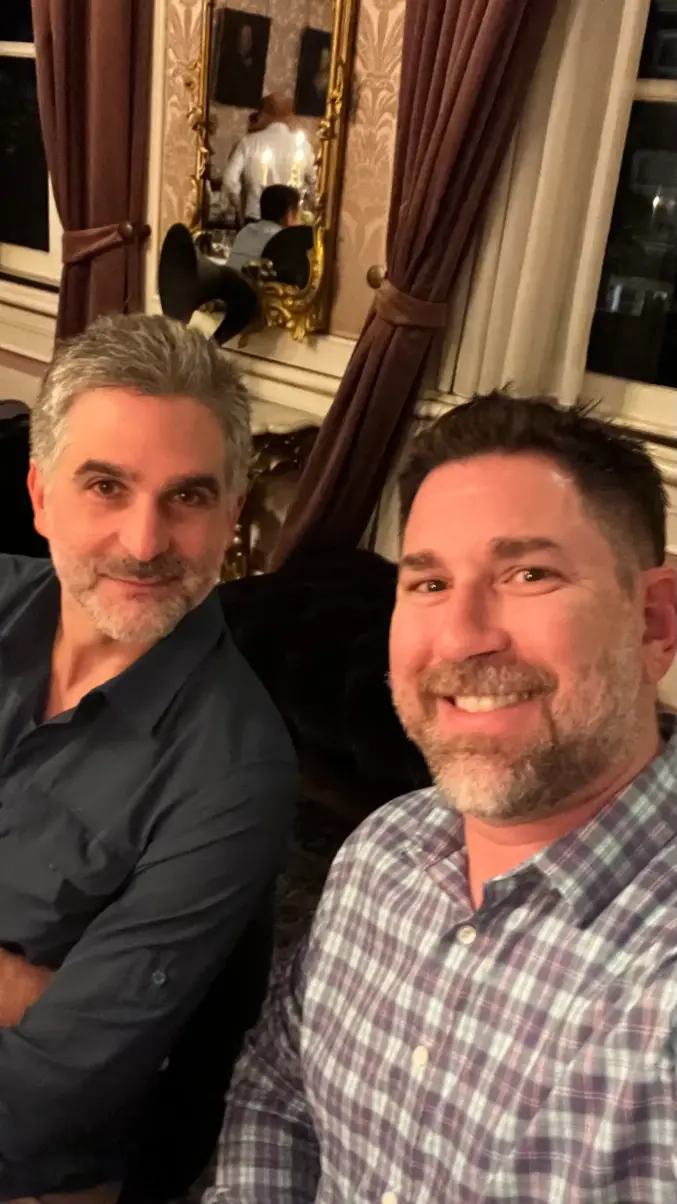
Mike and I were both at an Edgio executive dinner planned with our largest customer. The dinner was in Amsterdam, at a hotel near the show. Calendar invites were out. The spreadsheet was updated. On paper everything looked fine.
The account exec who owned that customer could not make the trip. The knowledge of who attends that dinner, and why it mattered, walked out the door with him.
We walked into the dinner. Standing outside was the main contact at our largest customer. The one person we needed to keep happy and who should of been invited to the dinner. Neither of us knew he was even in Amsterdam.
It was not a scheduling failure. It was an institutional knowledge failure. The schedule said where. It did not carry who, or why, or the history behind the meeting.
That dinner is on of the reasons Knowhere exists.
Jason, Knowhere founder. Edgio at IBC 2022.
After enough broken shows the requirements get clear. And every one of them has to hold up live, while the schedule moves.
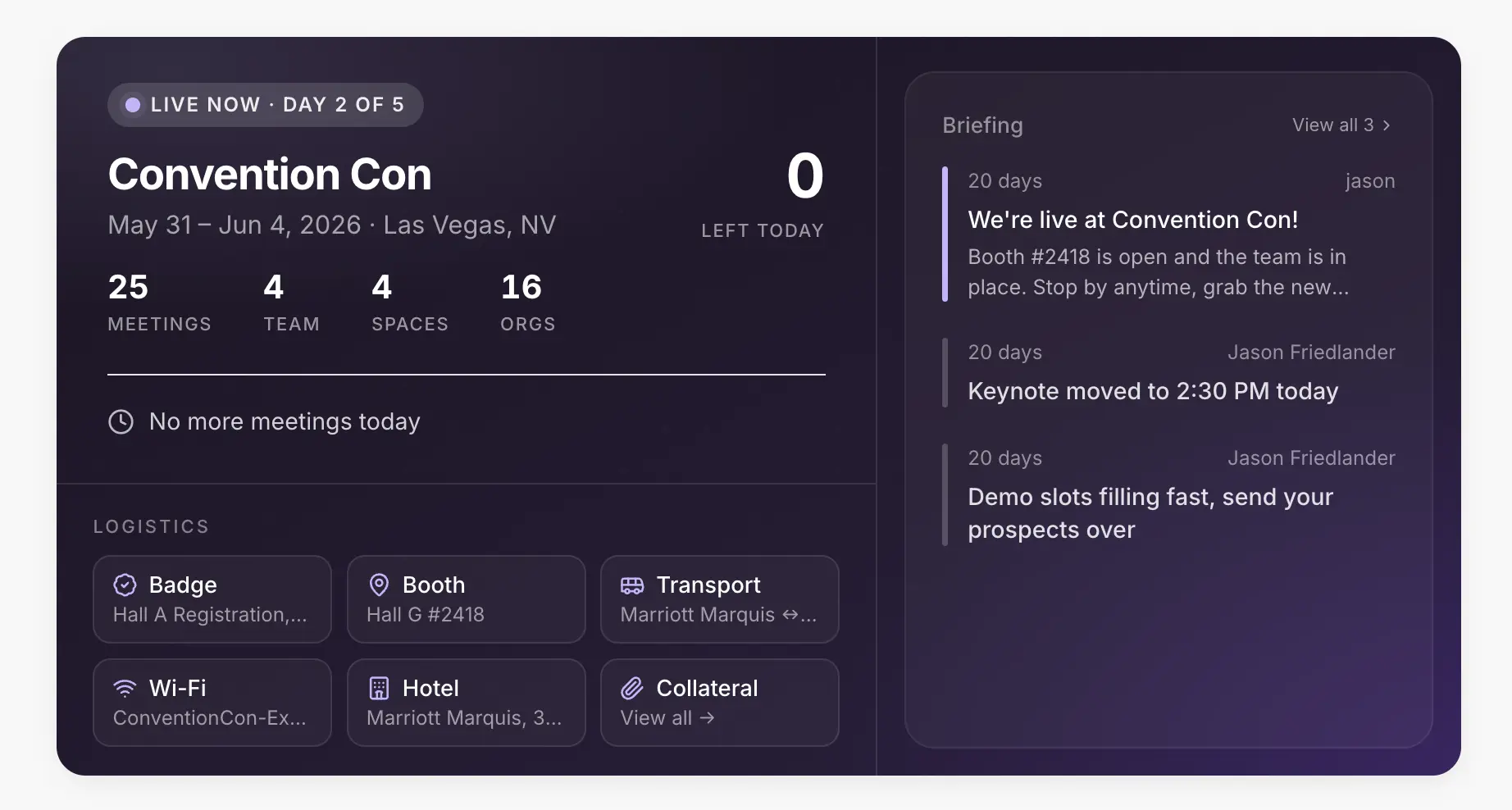
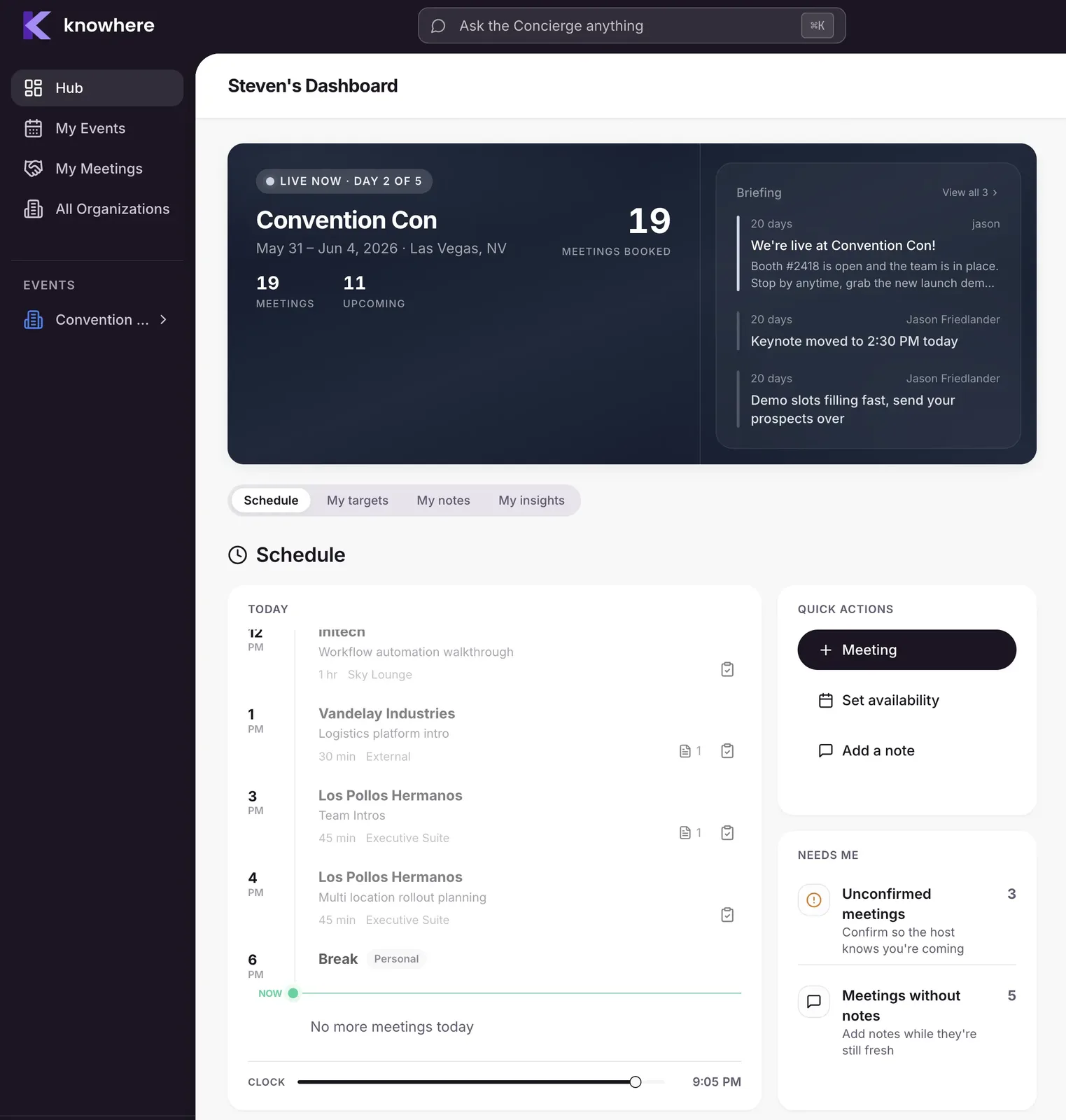
Every meeting, room, demo station, and person in one view that updates for everyone at once. Not fifteen tabs. Not fifteen versions.
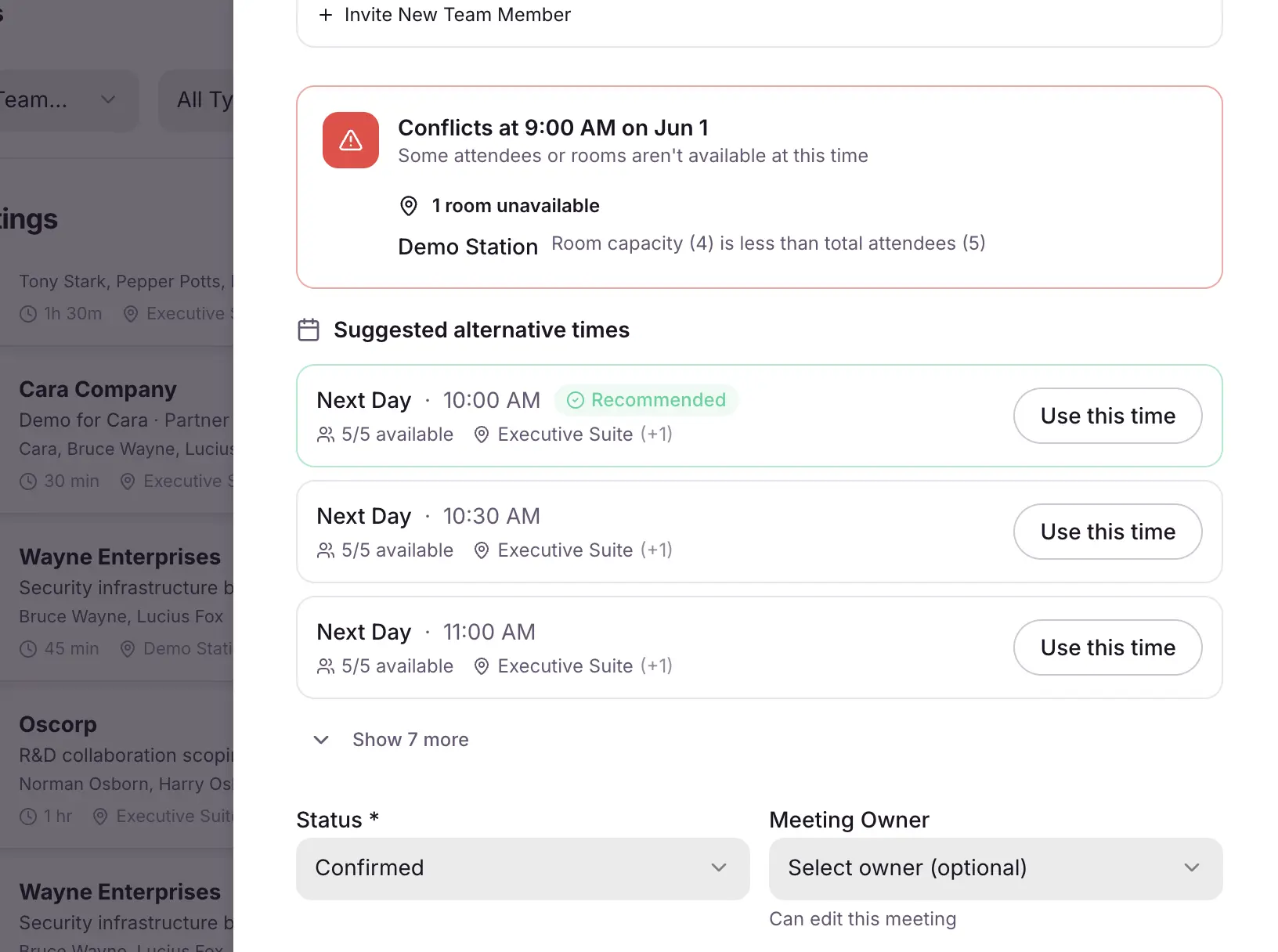
Every meeting checked against every other meeting in real time, across rooms, people, and travel time. You see the double booking before two executives walk into the same room.
Who is working the booth, who is in a meeting, who is free. Coverage gaps surface before peak hours, not during them.
A meeting is not just a time. It is a time, a room, a demo station, and the people in it. The tool has to treat physical space as real.
First time you met them. Last time. Every event in between. When the rep who owned the relationship leaves, the history does not leave with him.
At most companies it is one person. The title varies. The responsibility does not.
Owns event presence end to end. Books the booth, designs the demo, builds the team rotation, reconciles the meeting list at midnight.
Inherits the chaos when field has no tool. Owns whether meeting outcomes ever reach the CRM and whether event pipeline can be attributed.
Coordinates reps from two or more companies on one shared schedule. Joint customer meetings, booth handoffs, shared pipeline.
Runs the customer meeting program at the company's own user conference. 200 or more meetings across three days, with VIP stakes.
Whatever the title, it is a real person with a real budget and a real quarter on the line. Setting up the booth, the rooms, the demo stations, and the schedule is their name on it. When the show goes well, few people notice. When it breaks, everyone does.
One view for every meeting, room, demo station, and person. Conflict detection that runs live. Customer history that spans your whole show season.
Knowhere is vendor side software for B2B teams that exhibit at four or more events a year. It is not event organizer software. We do not compete with Cvent or Bizzabo. We replace the spreadsheet that field marketing, sales ops, and partnerships teams use to run the booth.
Knowhere is built by a team that ran this job for years before building the tool. We owned event presence at Verizon, Yahoo, Edgio, and Quickplay. Booths, demos, schedules, room assignments, and team coverage at major shows. We tried Airtable, Jifflenow, and spreadsheets. Each one failed in its own specific way. So we built the tool we wished we had.
Chief Product Officer
Chief Technology Officer
Chief Operating Officer
14 day free trial. Setup in 5 minutes. No IT involvement.